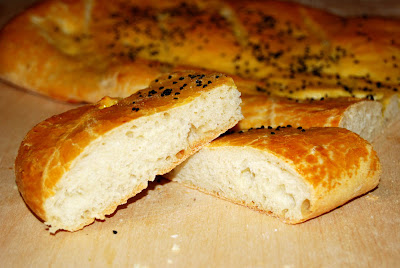


Occasionally, I have major cravings for tandir bread, or tandoori bread as it is better known in the US. Nothing comes close to the taste of a freshly baked crusty bread coming out of a piping hot clay oven. In Azerbaijan, bread is eaten almost with any food—it is always there on the table. I love hot tandir bread with white milk cheese, such as feta. Try it with fresh herbs on the side to nibble on with bread and cheese. Yum!
Back home, bread is not only a food item, but it is a staple with much reverence attached to it. So much so that it is considered sacred. It is a symbol of abundance and prosperity. It is important to us. We don’t throw it in a trash can. If you see a piece of bread on the street, you would pick it up and put it aside—somewhere where nobody could step on it. Some people would even kiss it then touch it with their forehead. It’s the sign of respect to bread that feeds us.
Back to tandir bread now. Although there are other bread varieties sold in Azerbaijani bakeries, tandir bread is usually preferred over others on special occasions, such as weddings, birthday parties and holiday celebrations. Typically, warm slices of tandir bread are placed next to individual serving plates. Although nothing can replace the flavor of a real tandir bread baked in the clay oven, here in the United States, I try to replicate the flavor and texture by baking my bread right in the kitchen oven. It turns out great! Bake it and see for yourself. You will love this bread.
Tandoori Bread (Tandir Bread)
Preparation time, including dough rising: 2 hours
Baking time: 20 minutes
Makes 1 medium loaf
Ingredients
1 package (1/4 oz / 7 g) dry yeast
1 ½ cups (12 fl oz/375 ml) warm water
1 teaspoon salt
3 cups all-purpose flour, plus extra for kneading
1 egg yolk or 1 tablespoon plain yogurt mixed with just a little water, for brushing
Pinch of Nigella sativa seeds (best choice), or poppy seeds or sesame seeds (black or white)
Directions
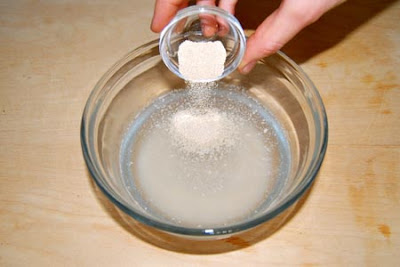
In a small bowl, mix yeast with water until the yeast is dissolved.
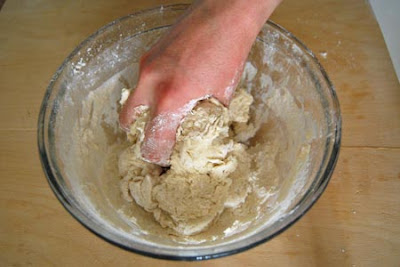
 Sift flour into a large bowl. Add salt and toss to combine. Gradually add the yeast-water mixture and stir with your hand until a rough ball forms.
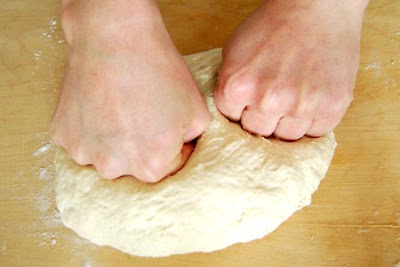
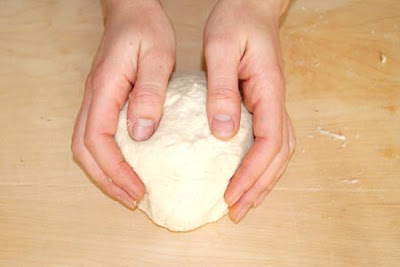
 Scrape the dough onto a lightly floured surface. Press any loose dough pieces into the ball and knead the dough, punching it down with your fists, folding it over and turning. Knead for about 8-10 minutes, or until smooth and elastic.
 Shape the dough into a ball and put it back into the large bowl. Cover the bowl with a kitchen towel or a plastic wrap.
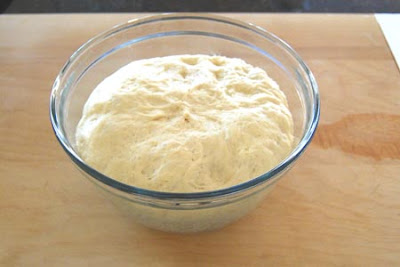
 Leave the dough to rise in a warm spot for about 1 ½ hours, or until doubled in bulk. The dough should look puffy and be soft when poked with a finger.
 Punch down the dough, then transfer it onto a lightly floured surface.
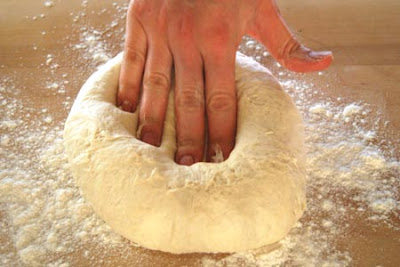 Shape the dough into a ball, and with your hands flatten slightly and stretch it lengthwise. If you have trouble stretching the dough with your hands (although this is the recommended method), you can use a rolling pin to do the job—start rolling out the dough beginning at one end until you obtain a long flat bread about ½ inch thick (1.27cm), 14 inches long (35cm) and 8 inches (20cm) wide.
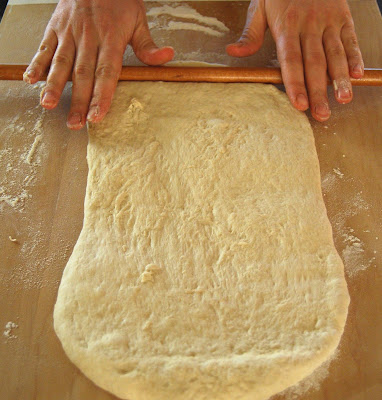 Carefully transfer the bread onto a non-stick baking sheet, fixing the shape as necessary. Leave the dough to rest and slightly rise on the baking sheet for another 15-20 minutes before baking.
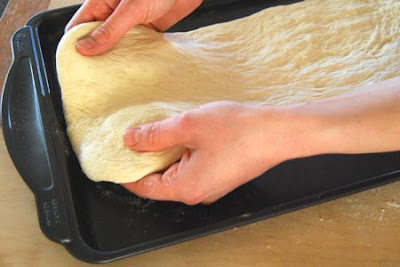 Preheat the oven to 400ºF (200ºC).
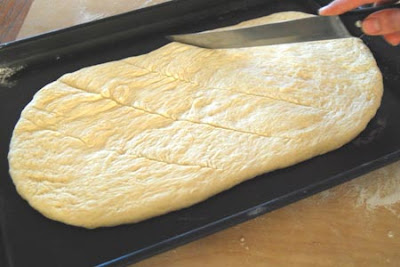
Using a knife, make shallow crosshatching slashes on the bread, 4 from right to left and 4 the opposite way, each at a slight angle. Or, using your pinkie, mark 3 shallow indentations along the length of the bread. Brush the bread evenly with the glaze of your choice and sprinkle with seeds.
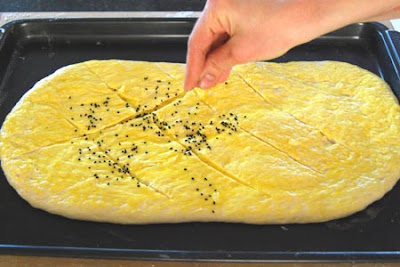 Place the baking sheet on the middle rack of the oven and bake the bread for 20-25 minutes, or until it is golden on top and sounds hollow when tapped on the bottom. Your tandoori bread (tandir bread) is ready!